
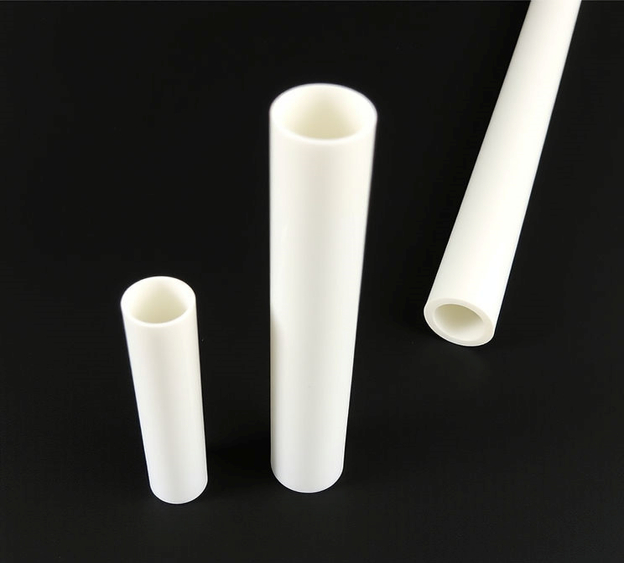
Industrial environments that involve high temperatures, corrosive chemicals, and mechanical stress require materials that can perform reliably over time. Selecting the right material is essential for maintaining efficiency and reducing maintenance costs. Two commonly used materials in such conditions are titanium tubes and silicon carbide pipes. Each offers unique advantages depending on the application.
Understanding their differences helps engineers and industrial buyers choose the most suitable material for harsh environments.
Overview of Titanium Tube
Titanium is a high-performance metal known for its strength and resistance to corrosion. A titanium tube is widely used in industries where materials are exposed to aggressive environments, such as chemical processing and marine systems.
Titanium tubes are valued for their durability and long service life. They provide reliable performance even when exposed to challenging conditions.
Key Properties of Titanium Tube
Titanium tubes offer several important benefits. It has excellent corrosion resistance, especially in environments that involve seawater, acids, and other chemicals. This makes it ideal for fluid handling systems.
It also has a high strength-to-weight ratio, which allows it to provide strong performance without adding excessive weight.
Titanium is resistant to fatigue, which ensures long-term reliability under repeated stress. It can also perform well at elevated temperatures, although it is not designed for extreme heat compared to some ceramics.
Overview of Silicon Carbide Pipe
A silicon carbide pipe is a ceramic component made from silicon and carbon. It is designed for applications that involve high temperatures, wear, and chemical exposure.
Silicon carbide pipes are widely used in industrial systems where materials must withstand both thermal and mechanical stress.
Key Properties of Silicon Carbide Pipe
Silicon carbide pipe offers several advantages in harsh environments. It has excellent resistance to high temperatures and can maintain its structure even under extreme heat. It provides strong resistance to wear and abrasion, making it suitable for systems that handle solid particles or abrasive materials.
It also offers good resistance to chemical corrosion, allowing it to perform well in aggressive environments. In addition, silicon carbide has strong resistance to thermal shock, which allows it to handle rapid temperature changes.
Performance in Harsh Environments
Both titanium tubes and silicon carbide pipes perform well in harsh environments, but their strengths differ. A titanium tube is best suited for environments where corrosion is the main concern. It performs well in chemical and marine systems where exposure to corrosive fluids is constant.
Silicon carbide pipe is better suited for environments that involve extreme heat and abrasion. It can handle conditions that would damage most metals.
Applications in Industry
Titanium tubes are widely used in heat exchangers, chemical processing equipment, and marine systems. It is also used in piping systems where corrosion resistance is critical.
Silicon carbide pipe is commonly used in furnace systems, chemical plants, and industries that handle abrasive materials. It is also used in high-temperature gas and fluid transport systems.
In some cases, both materials may be used together in different parts of the same system to achieve optimal performance.
Key Differences to Consider
The main difference between a titanium tube and a silicon carbide pipe lies in their material type and performance. Titanium is a metal that offers flexibility and corrosion resistance. It is suitable for systems that require strength and durability in fluid handling.
Silicon carbide is a ceramic that offers superior resistance to heat and wear. It is ideal for extreme conditions where metals may fail.
Another difference is mechanical behavior. Titanium can handle mechanical stress better, while silicon carbide is more brittle and must be used carefully in load-bearing applications.
How to Choose the Right Material
Choosing between a titanium tube and a silicon carbide pipe depends on the specific requirements of the application. If the system involves corrosive fluids and requires mechanical strength, titanium is often the better choice.
If the application involves extreme heat, abrasion, or rapid temperature changes, silicon carbide is more suitable. Engineers should evaluate factors such as temperature, chemical exposure, and mechanical load before making a decision.
Conclusion
Titanium tubes and silicon carbide pipes are both important materials for harsh industrial environments. Each offers unique advantages that make it suitable for different conditions.
By understanding their properties and differences, engineers and industrial buyers can select the right material to improve performance, reduce maintenance, and ensure long-term reliability in demanding applications.